If you're wondering where to travel this weekend, start by deciding just one thing: which spring seafood do you crave right now? Is it webfoot octopus (jjukkumi), flounder (dotari), or sea squirt (meongge)? Your travel destination will naturally follow.
Spring is when seafood most distinctly showcases the season's bounty. In March, it's jjukkumi and dotari; in April and May, it's clams (bajirak) and meongge. Deciding what to eat first will quickly guide you whether to head to the West Coast or the South Coast.
Why Spring Seafood is Special – Data Speaks for Itself
"It's delicious because it's in season" might sound like a vague statement. However, actual measurements by the National Institute of Fisheries Science tell a different story. Oysters harvested in March showed 1.3 times higher umami and 2.3 times higher sweetness compared to those harvested in December. Even with the same oyster, the timing of consumption drastically changes its flavor.
March jjukkumi is at its plumpest and most flavorful, rich in taurine and protein, yet low in fat. Dotari is a high-protein, low-fat white fish packed with Vitamin A, perfect for spring. Dotari-ssukguk, a flounder and mugwort soup, is a dish that can only be truly savored during this time. As April and May arrive, bajirak and meongge take center stage.
Simply choosing your region and menu according to the season can significantly enhance your travel satisfaction.
West Coast Course: Jjukkumi + Bajirak (Seocheon, Taean, Gunsan)
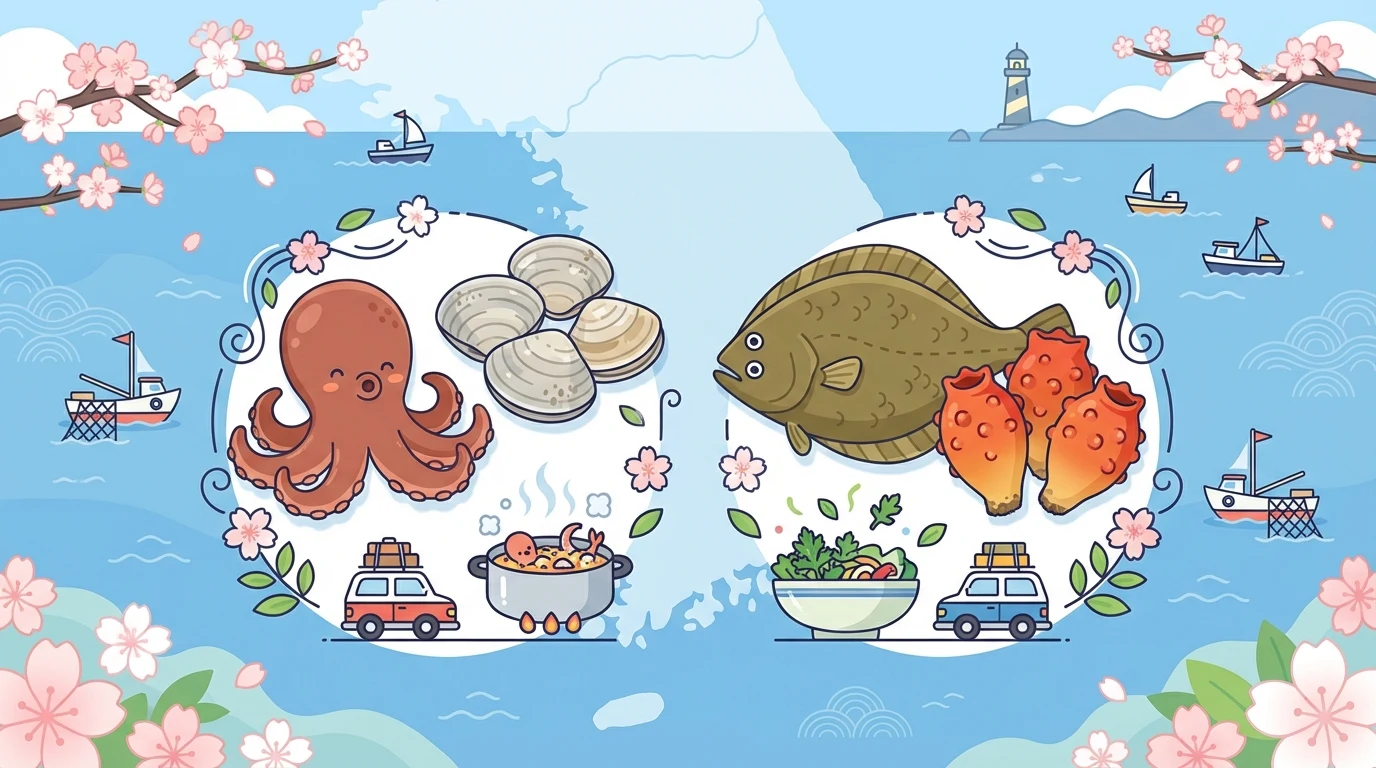
For the West Coast, Seocheon, Taean, and Gunsan offer the most reliable flow of deliciousness. All three regions are well-known for jjukkumi. Enjoy them as shabu-shabu or a spicy stir-fry, depending on your preference. Their convenient proximity makes them ideal for a 1-night, 2-day trip with a partner or friends.
Taean is a focal point for the West Coast course, offering both jjukkumi and bajirak. The clams (bajirak) from Taean's waters are 100% natural, and their broth deepens in flavor as they become plump in April and May. Start your day with a walk along the coast, enjoy jjukkumi for lunch, and finish with bajirak kalguksu (clam noodle soup) or a clam stew for dinner – a naturally flowing itinerary for the day.
If you prefer a trip focused on vivid seasonal flavors over extravagant views, the West Coast is a perfect fit.
South Coast Course: Dotari-ssukguk + Meongge (Tongyeong, Geoje)
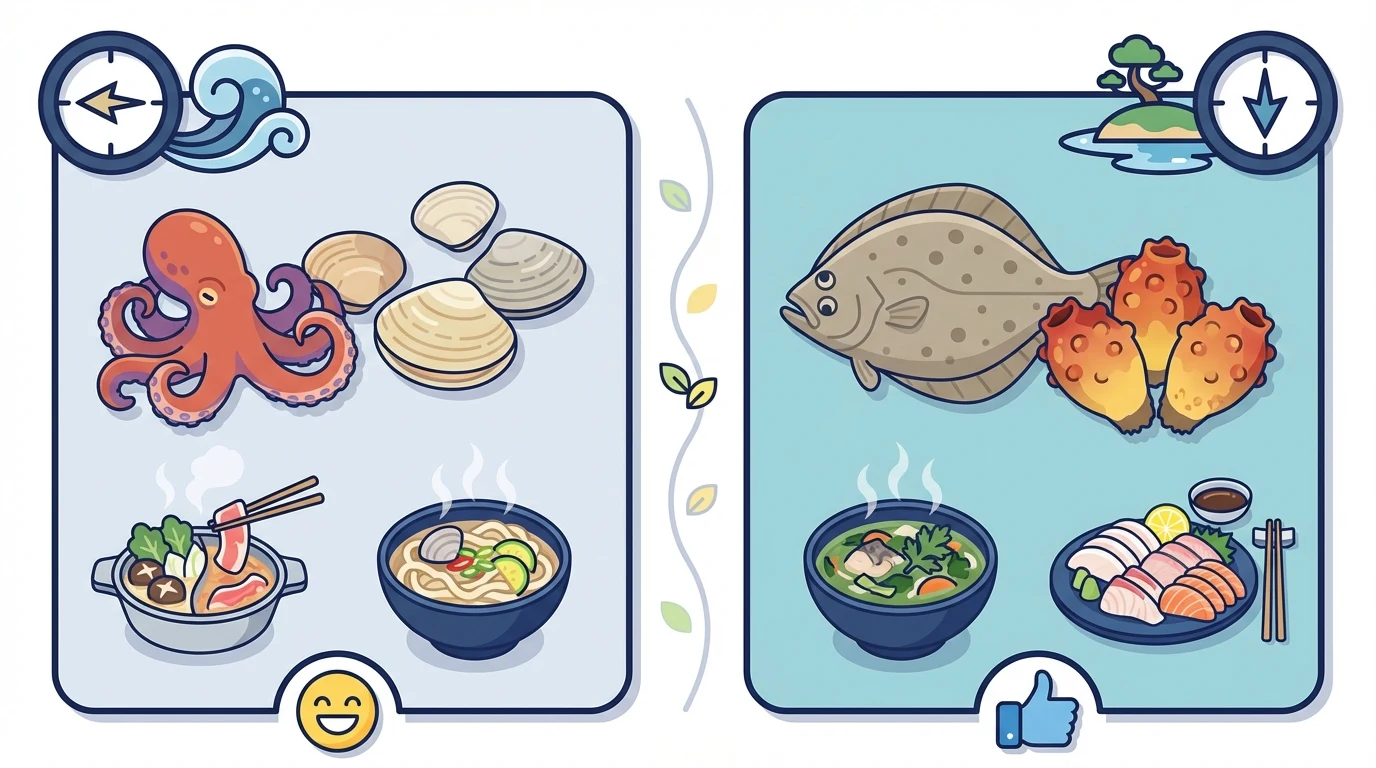
The heart of the South Coast lies in Tongyeong and Geoje. While dotari can be enjoyed as sashimi, dotari-ssukguk (flounder and mugwort soup) is undoubtedly the signature dish in spring. Tongyeong and Geoje are especially famous for this soup, and its clean and light flavor makes it the perfect first meal after a long journey.
April and May overlap with the meongge (sea squirt) season. Tongyeong and Geoje are major producers, accounting for over 70% of the nation's sea squirt harvest, offering the sweetest and most tender meongge during this season. Rather than rushing to a single famous restaurant, spending a leisurely half-day in each area suits the region best. The beautiful scenery means there's never a dull moment between meals.
For a Light Trip: Dangjin Silchi
A gourmet trip doesn't always have to be an overnight stay. Silchi (whitebait), in season during April, can be enjoyed in Dangjin and is perfect for a day trip. It's a spring outing focused on savoring one clear meal and walking around the area, without too many plans. For those with packed schedules, these lighter itineraries can often create more lasting memories.
One Way to Eat Well Locally
What's more important than a specific restaurant name is "what to eat in this region right now." When you arrive, simply asking, "What's most popular today?" can be faster than searching online. Deciding beforehand whether you prefer sashimi or a soup will also make ordering much smoother.
For seafood, it's best to go during peak hours when turnover is high. Lunch or early dinner is generally better for freshness than late evening.
Caution: If you have allergies to shellfish or crustaceans, always confirm the ingredients before ordering. On days when you're not feeling well, it's practical to choose cooked dishes first.
Note: Seasonal timing and local event schedules may vary depending on climate and regional circumstances. It's safer to double-check local official announcements right before your trip.
Season First, Rather Than Far Away
The essence of a spring seafood trip isn't about visiting many new places, but about savoring the most delicious seasonal delicacy at its peak.
If it's March, head to the West Coast for jjukkumi and dotari. If it's April or May, consider Taean for bajirak or Tongyeong/Geoje for meongge. If you're unsure where to go, first decide on the one thing you truly want to eat. The destination will follow.