After a weekend hike or an evening finishing farm work, you might find yourself instinctively checking your arms and legs. This isn't unwarranted paranoia. From April until early winter, it's crucial to be vigilant about Severe Fever with Thrombocytopenia Syndrome (SFTS), a serious illness transmitted by tick bites.
According to the Korea Disease Control and Prevention Agency (KDCA), SFTS is a viral disease transmitted by infected ticks, specifically the Haemaphysalis longicornis tick. It's characterized by high fever, gastrointestinal symptoms like nausea and diarrhea, and a decrease in white blood cells and platelets. From 2013 to 2024, the cumulative fatality rate in Korea was approximately 18.5%, a figure that makes it difficult to dismiss as a mild illness in its early stages.
In 2025, as of November 9th, the number of SFTS patients reached 223, the highest in the past five years, already surpassing the total patient count for 2024 (170 cases) (Republic of Korea Policy Briefing). Over 58% of these cases were individuals aged 70 or older, with most infections occurring during common outdoor activities such as farming, hiking, and camping.
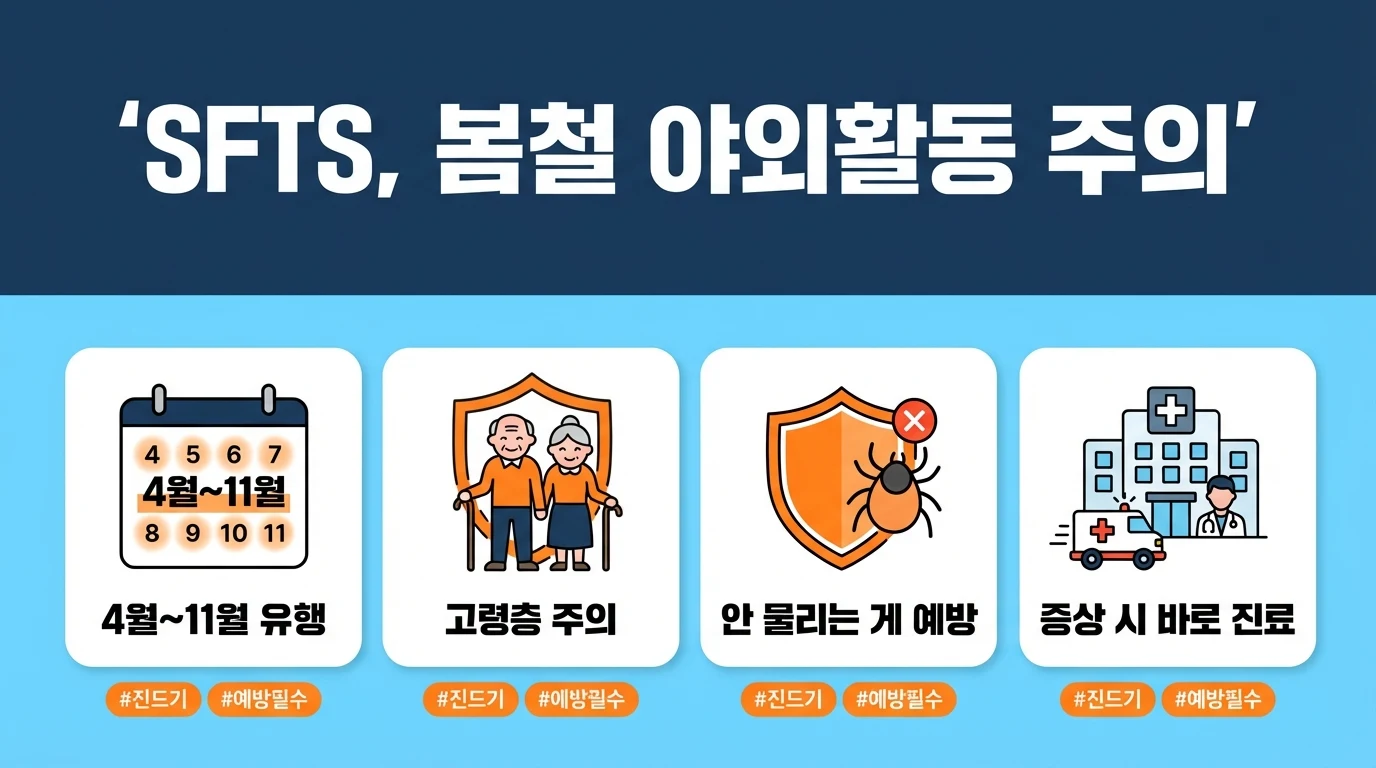
At a Glance
- Peak Season: April to November, when ticks are most active.
- High-Risk Groups: Frequent farm workers, the elderly, and families who spend a lot of time outdoors.
- Current Prevention: Avoiding tick bites is the only effective prevention method.
- Suspected Symptoms: High fever, vomiting, diarrhea, severe lethargy after outdoor activities → Seek immediate medical attention.
Why We Can't Take It Lightly This Spring Too
While patient statistics for early 2026 are not yet fully compiled, the fact that last year saw the highest number of cases in five years signals that we cannot afford to lower our guard this year either.
If you frequently engage in farm work, or if your parents often participate in outdoor activities in rural areas, this isn't just someone else's problem. SFTS isn't a disease that only affects particularly vulnerable individuals; rather, "ordinary outdoor activities" become direct pathways for infection.
Don't Dismiss These Symptoms as Just a Cold or Flu
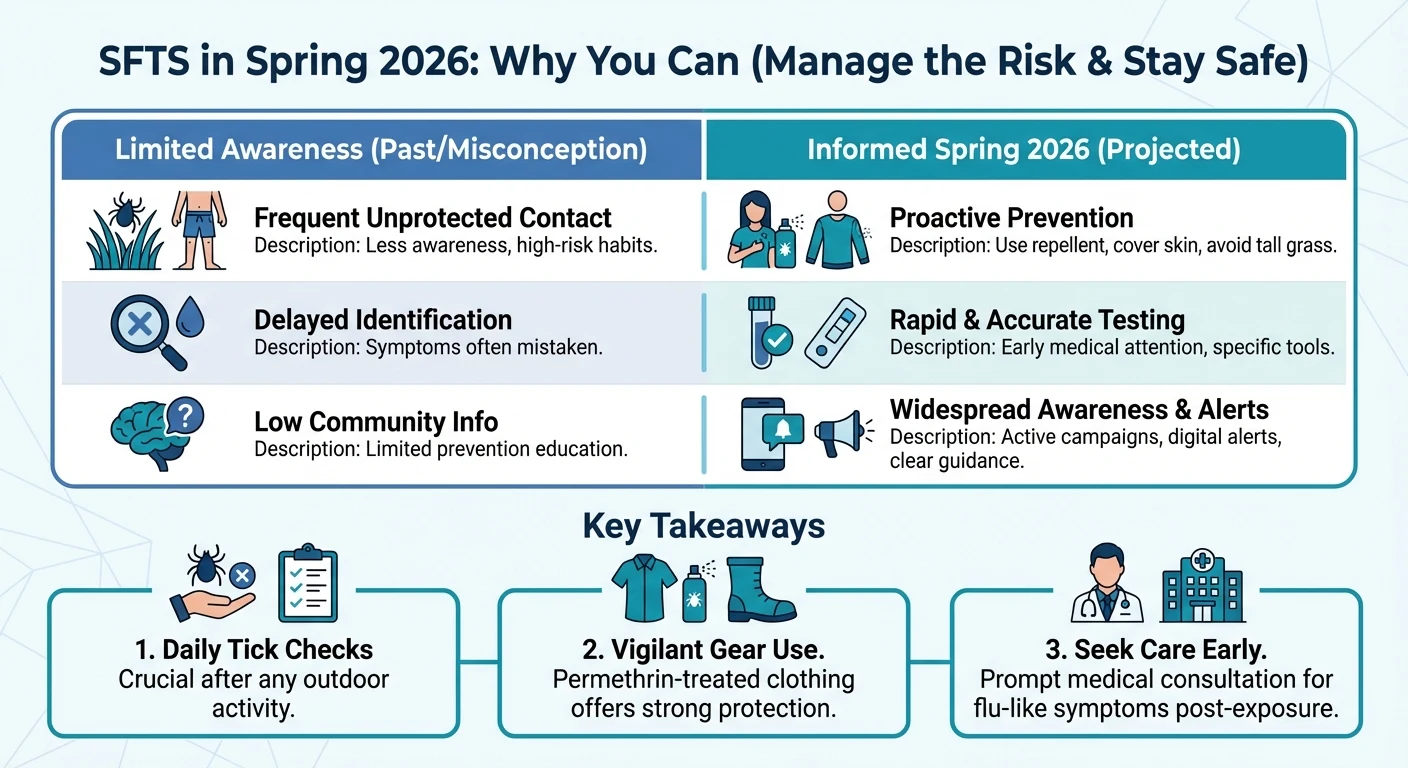
Early symptoms of SFTS can easily be mistaken for a common cold, flu, or gastroenteritis. They include high fever, accompanied by gastrointestinal symptoms like nausea, vomiting, and diarrhea. Since a decrease in white blood cells and platelets cannot be self-diagnosed without a blood test, the most crucial response is to quickly seek medical attention at the first sign of suspicion.
If you've recently engaged in farm work, hiking, or camping and subsequently developed a fever and severe fatigue, it might not just be simple exhaustion. Even if you don't clearly recall a tick bite, the environment you were in can be an important clue for diagnosis.
Caution: If you experience high fever, vomiting, diarrhea, or severe lethargy after outdoor activities, it's safer to contact a medical institution or seek medical attention immediately rather than waiting a few days.
Although SFTS is primarily a tick-borne infectious disease, rare cases of human-to-human secondary transmission via a patient's blood or bodily fluids have been reported. In July 2025, a government briefing reported a case where seven medical staff members in a Cheongju medical institution were secondarily infected after exposure to blood and bodily fluids during CPR on a severely ill patient. While this doesn't mean everyday contact is a primary transmission route, it's advisable for family members caring for a patient or medical professionals to be aware of situations requiring extra caution.
Prevention Requires Little Preparation, But Absolute Vigilance
At this moment, there's only one answer to SFTS prevention: avoid tick bites. As there's no vaccine or specific treatment widely available to the public, preventive habits are your only defense this spring.
When engaging in activities with potential tick exposure, such as farming, hiking, or camping, wear long sleeves and pants, and use tick repellent. After returning home, immediately wash your clothes and thoroughly check your entire body. The thought, 'I was only out for a short while, so it'll be fine,' is the most common oversight.
Especially if your elderly parents frequently engage in farm work or outdoor activities, it's much more practical to ensure they follow these habits, just as you would for yourself.
If You've Been Bitten by a Tick or Suspect Exposure
Avoid procrastinating with the mindset, 'I'll go to the doctor if symptoms appear.' Since there are no widely available specific treatments, it's far more important to seek prompt medical evaluation in suspicious situations.
When seeking medical attention, be sure to inform your doctor about any recent outdoor activity. Even if you don't clearly remember a tick bite, the environment you were in can aid in diagnosis. If you've been directly exposed to a patient's blood or bodily fluids while caring for them, it's safest to consult with medical staff immediately.
When Will a Vaccine Be Available? Prevention Comes First
In December 2025, the International Vaccine Institute (IVI) announced that it, along with the KDCA's National Institute of Health, ST Pharm, and Seoul National University, had commenced development of the world's first AI-based mRNA SFTS vaccine in collaboration with CEPI. CEPI is providing up to $16 million in support, with preclinical and Phase 1/2 clinical trials planned in Korea until January 2030.
While this is a significant advancement, it's not a stage where immediate effects can be expected for outdoor activities this spring. There's still time needed between the development schedule and actual commercialization. What's required now is not an attitude of waiting for a vaccine, but rather prevention and quick action to ensure a safe spring.
Conclusion
While SFTS might sound complex and unfamiliar, in reality, it's closely associated with an afternoon of farm work, a weekend hike in the mountains, or an evening after camping.
What to remember is simple: check your body after outdoor activities, and if you develop a fever or gastrointestinal symptoms, recall your activity history and seek medical attention immediately. If elderly family members frequently go outdoors, this single habit can make a surprisingly big difference.