While waiting for test results, the first thoughts that come to mind are often similar: "If this is truly a rare disease, how will it be treated?" "How much will it cost?" "What should I do first?" These questions can feel overwhelming all at once.
For many, 2026 marks the year when some answers to these anxieties began to emerge. On January 5th, the Ministry of Health and Welfare, the Ministry of Food and Drug Safety, and the Korea Disease Control and Prevention Agency jointly announced enhanced support measures for rare and intractable diseases. The aim is to lower treatment costs, expedite access to therapies, and ensure seamless connections from medical care to social welfare.

Costs First: What's Actually Changed This Year
The most direct change concerns out-of-pocket medical expenses under national health insurance. Currently, patients with rare and intractable diseases pay around 10% of their treatment costs. However, additional reduction measures are expected to be finalized in the first half of 2026 and implemented from the second half. The exact reduction percentage will be confirmed in subsequent guidelines, so it's advisable to check directly with your hospital's billing department or the National Health Insurance Service.
The scope of the special co-payment exemption program (for rare and intractable diseases) has also expanded. As of January this year, 70 new conditions, including congenital functional short bowel syndrome, have been added, bringing the total number of covered diseases to 1,389. Even if you've already received a diagnosis, there's good reason to reconfirm if your condition is newly included.
Note: There can be differences between the announced support schemes and their actual implementation criteria. It's safer to specifically verify your disease name and the effective dates of coverage.
What Takes Longer Than Medication: Diagnosis, Psychology, Connection
In rare disease treatment, the most exhausting aspects are often not the medications themselves. It's the time it takes to get a diagnosis, finding the right hospital, and knowing which support to apply for and when. Both patients and caregivers frequently become exhausted during this process.
According to Samsung Medical Center, rare disease patients and their caregivers often experience prolonged periods of tension and anxiety from diagnosis through treatment and daily adaptation. Emotional support, such as psychological counseling, significantly impacts treatment adherence and overall well-being. While juggling test schedules and paperwork, mental health issues often get pushed aside. However, inquiring about counseling referrals or support channels early on is a more practical approach.
Rare diseases are structured in a way that makes it difficult for a single institution to manage everything from start to finish. Identifying regional hub centers or rare disease treatment centers that connect diagnosis, treatment, rehabilitation, and welfare support early on can make subsequent stages much smoother.
Gene Therapy and New Drugs: Positive Trends, Different Speeds
In the realm of rare diseases, gene therapy is the most frequently discussed technological trend for 2026. According to reports from Yaksa Gongron (a pharmaceutical news outlet), R&D for gene therapies is expanding beyond rare diseases to other disease areas. The U.S. FDA has also introduced a new approval framework for rare genetic disease treatments, aiming to reduce clinical costs and development timelines.
The direction is certainly promising. However, 'global research trends are improving' is different from 'treatment options for my specific disease will change soon.' New drug development varies in pace for each disease, and clinical trial phases involve significant variables. While staying informed about the latest trends, it's crucial to confirm actual treatment options for your condition separately with your medical team.
What to Verify Right Now
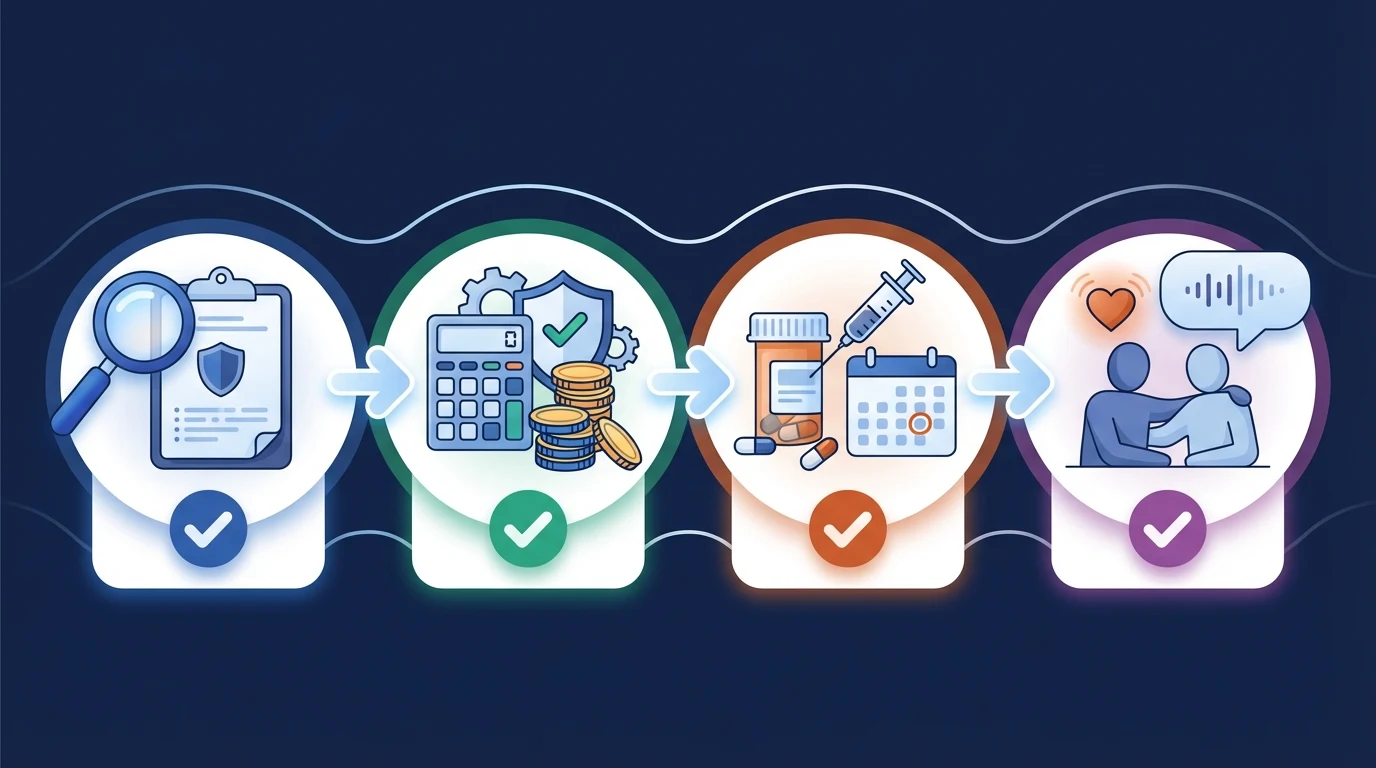
If you suspect a rare disease or have received a diagnosis, the following steps are practical:
- Confirm that your diagnosis and disease code are accurately recorded.
- Check if your disease is included in the expanded special co-payment exemption program for 2026.
- Verify out-of-pocket expenses, medical expense support programs, and income/asset criteria with your hospital and relevant institutions.
- Divide roles with your caregiver for organizing medical records, administrative inquiries, and daily support.
- If anxiety, sleep problems, or caregiver fatigue accumulate, do not delay seeking psychological counseling or hospital-based counseling referrals.
Managing a rare disease isn't solved by 'one good piece of information.' Consistent management and timely connections are ultimately what preserve your energy and well-being.
What 2026 Changes, and What It Doesn't
The system is definitely improving. The scope of the special co-payment exemption has expanded, further reductions in out-of-pocket expenses have been announced, and the government has officially committed to seamless support from treatment to welfare.
However, some things remain unchanged. Different treatment pathways for each disease, conditions for which no new drugs are yet available, and disparities in regional healthcare access. These realities won't be resolved overnight, even with systemic improvements.
Therefore, the most practical approach right now is to quickly identify the changed policies and calmly understand the appropriate medical and welfare support pathways for your specific condition. In an uncertain situation, the least exhausting method is not to wait vaguely, but to check off what you can, one by one.