Why It Feels So Complicated
You walk into a beauty store in Seoul, open a K-beauty app, or watch a skincare shelf tour online, and suddenly it seems like everyone owns ten bottles you have never heard of. One person says double cleansing is essential, another says toner is non-negotiable, and now you are wondering if good skin in Korea requires a full-time commitment. It does not.
A Korean skincare routine for beginners is often introduced through the famous "10-step routine," but that number is more of a menu than a rulebook. Some beginner guides note that the routine is commonly described in 10 steps, yet not every step needs to happen every day. The beginner-friendly takeaway is consistent across sources: if you are new to K-beauty, it makes more sense to start with a few core products — such as an oil cleanser, water-based cleanser, toner, and moisturizer — then add more only if your skin actually needs them.
That approach matters because the real goal is not to build the longest routine. Korean skincare tends to focus on gentle care and hydration, which can work across oily, dry, combination, and sensitive skin types when you choose products based on your own needs. In other words, the smartest way to start Korean skincare is also the simplest: know your skin, begin small, and stay consistent.
Once you stop treating K-beauty like a 10-step exam, the routine becomes much easier to understand.
What Korean Skincare Is Really Trying to Do
A lot of beginners assume Korean skincare is about chasing glass skin overnight. In practice, it is usually more about preventing problems early, supporting the skin barrier, and keeping skin well hydrated over time.
Korean skincare is sometimes described as a "care before repair" mindset — a useful way to think about it regardless of how any individual brand phrases it. Instead of scrubbing, stripping, or attacking your face with strong products all at once, K-beauty often leans on gentle cleansing, lightweight layers, and barrier-friendly ingredients.
That is also why many Korean products feel lighter than people expect. Rather than one very heavy cream doing all the work, you may see a routine built around thinner layers: toner, essence, serum, moisturizer, and sunscreen. You do not need all of those from day one, but understanding the logic helps. The idea is to keep skin comfortable, calm, and hydrated so it can look naturally healthy.
You will also hear the word chok chok (촉촉) in Korean beauty conversations. It describes skin that looks soft, plump, and hydrated rather than greasy. That distinction matters, because a good easy K-beauty routine is not about piling on shine. It is about helping skin hold water and stay balanced.
Once you understand that hydration and barrier care sit at the center of K-beauty, the actual steps start to make sense.
A Simple Korean Skincare Routine for Beginners
If you want a simple Korean skincare routine for beginners, think in terms of morning basics, evening basics, and optional extras later. You do not need a shelf full of products to get started.
Your morning routine
In the morning, most beginners do well with three or four steps.
Start with a gentle cleanse, especially if you wake up oily, sweaty, or have applied heavy night products. If your skin is dry or sensitive, a water rinse or very mild cleanser may be enough. The goal is to refresh your skin, not strip it.
Next comes toner. In K-beauty, toner is often less about harsh astringents and more about adding a light layer of hydration. A beginner toner should make your skin feel comfortable, not tight or tingly.
After that, use a moisturizer that matches your skin type. Gel creams are usually the right weight for oily skin. Cream or lotion textures often suit drier skin better.
Finish with sunscreen, every day. This is the one step beginners should not treat as optional. The American Academy of Dermatology recommends a broad-spectrum sunscreen with SPF 30 or higher, and that advice fits perfectly with the preventive mindset that makes Korean skincare so popular in the first place.
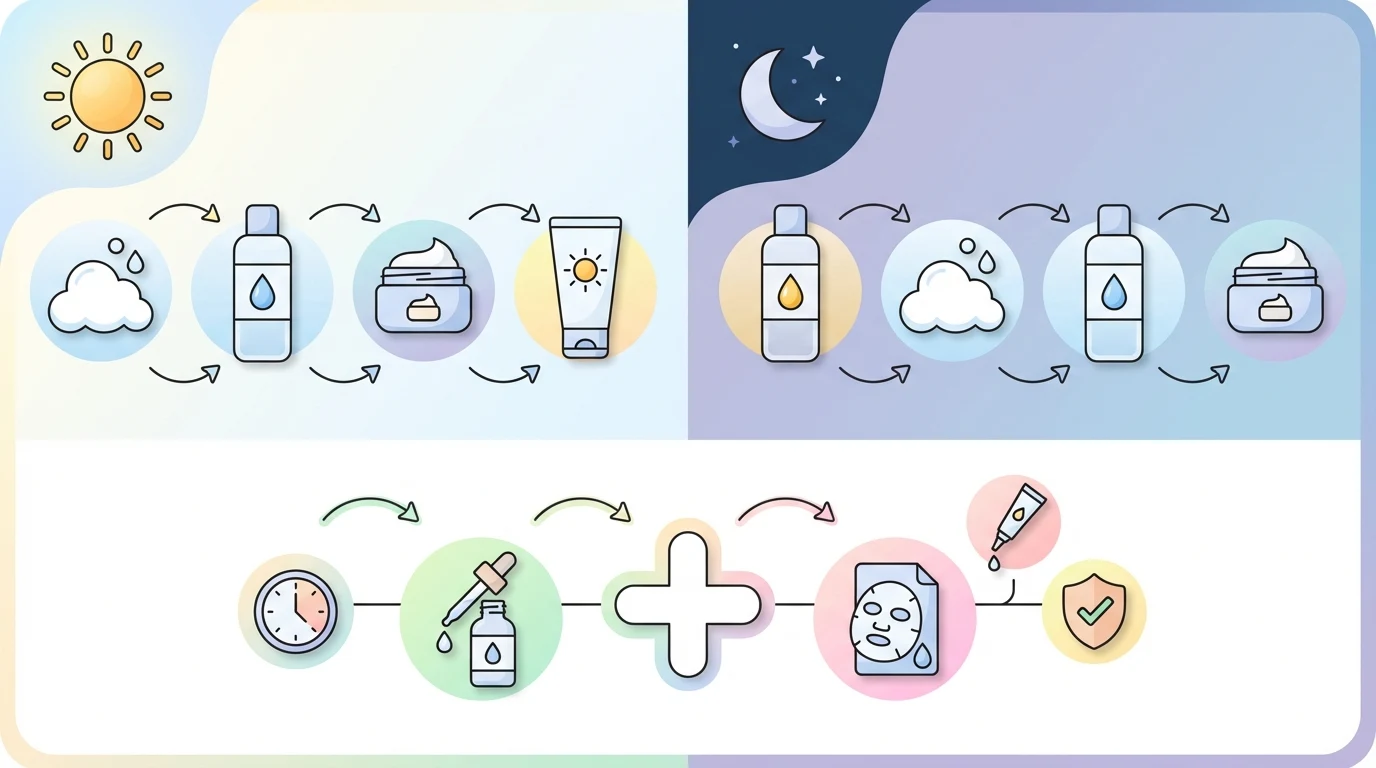
A beginner morning routine can be as simple as cleanser, toner, moisturizer, sunscreen. That is already a strong routine, and it sets you up well for the evening side.
Your evening routine
Night is where Korean skincare often adds one important extra step: double cleansing.
If you wore sunscreen, makeup, or spent the day in a city with dust and pollution, start with an oil cleanser. This first step helps dissolve makeup, sunscreen, excess sebum, and other oil-based residue. Despite the name, oil cleansers are not just for oily skin. Used properly, they are simply a practical way to remove stubborn buildup more gently.
Follow that with a water-based cleanser. This second step removes leftover residue, sweat, and water-based debris. You should finish with skin that feels clean but not tight or stripped.
After cleansing, apply your toner and then your moisturizer. If your skin feels especially dry, you can use a slightly richer cream at night than you do in the morning.
So your beginner evening routine becomes oil cleanser, water-based cleanser, toner, moisturizer. These steps are easy to understand, easy to repeat, and they cover the basics extremely well.
Once that feels normal, then you can decide whether you actually need more.
When to add extras
This is where many people get overwhelmed. They hear about essences, ampoules, serums, sleeping packs, sheet masks, exfoliants, and eye creams, then assume all of them belong in the same routine. They do not.
An essence in K-beauty is usually a lightweight hydrating layer that sits somewhere between toner and serum. An ampoule is often a more concentrated treatment, though the terms "serum" and "ampoule" overlap a lot in practice.
For beginners, extras make sense only when you can answer a simple question: what problem is this product supposed to solve? If the answer is vague, skip it for now.
A smart order for adding extras:
- Add a hydrating essence or serum if your skin still feels dry.
- Add a calming serum if you deal with redness or irritation.
- Add a gentle exfoliant only if texture or clogged pores are a real issue.
- Add sheet masks occasionally for hydration or soothing — not because you think a serious routine requires them.
If your core routine is working, that is a success, not a sign that you are missing steps.
How to Add Products Without Irritating Your Skin
One of the biggest mistakes in K-beauty for beginners is trying five new products in the same week. If your skin reacts, you will have no idea which one caused the problem.
A better approach is to add one new product at a time, then give it at least a week or two before introducing something else. This is especially important for active ingredients like exfoliating acids, retinol, high-strength vitamin C, or even niacinamide if your skin is reactive. These ingredients can work well for many people, but they can also irritate beginners who move too fast.
Patch testing is worth the effort. The American Academy of Dermatology advises testing skincare on a small area for several days before regular use — a practical habit, especially when you are trying unfamiliar ingredients or fragranced products. If you notice burning, swelling, intense itching, or a rash, stop using the product.
It also helps to remember that more products does not equal better skin. The AAD notes that using too many products can irritate the skin, especially when you layer multiple treatment products together. That point matters in K-beauty because layering is useful only when the layers are gentle and purposeful.
A calm routine beats an ambitious routine almost every time.
Beginner-Friendly Ingredients to Look For
You do not need to memorize every trending ingredient name to start Korean skincare. A few categories will carry most beginners just fine.
Hyaluronic acid is one of the easiest places to start. It helps attract water to the skin, which is why it shows up in so many toners, essences, and creams. If your skin feels dehydrated or tight, this is usually a safe and effective ingredient to look for.
Ceramides are another excellent beginner choice. They help support the skin barrier, which matters if your face often feels dry, easily irritated, or over-cleansed.
Centella asiatica, often sold as cica or listed as byeongpul (병풀) on Korean labels, is widely used in calming products. It is common in toners, serums, and creams designed for sensitive or redness-prone skin.
Snail mucin is one of the ingredients many newcomers hear about first. It sounds unusual, but in skincare it is mostly valued for hydration and skin comfort — a gentle, barrier-supportive option that works well alongside ceramides, peptides, and hyaluronic acid. It is not magic, but it can be a nice hydrating addition if your skin tolerates it.
You may also see green tea, mugwort, and propolis in Korean skincare products. These are often marketed for calming or antioxidant support and can be good additions, but beginners should treat them like any other ingredient: read the label, patch test, and avoid assuming "natural" automatically means irritation-free.
If you focus on hydration, barrier support, and low-irritation formulas, you are already choosing ingredients the way many experienced K-beauty users do.
Adjust the Routine to Your Skin Type
The best easy K-beauty routine is the one that suits your actual skin, not the one that looked best in a video.
Oily or acne-prone skin
If your skin gets shiny quickly, feels congested, or breaks out often, keep your routine light and consistent. Choose gel or lotion textures, look for labels like non-comedogenic when available, and do not skip moisturizer just because you are oily. Dehydrated oily skin often gets worse, not better.
Double cleansing at night can be particularly helpful if you wear sunscreen daily. Just make sure both cleansers are gentle. If you want to add an active ingredient later, consider starting with a mild exfoliant or a niacinamide serum — but not both at once.
Dry or dehydrated skin
Dry skin usually needs less deep cleaning and more help holding onto water. Use a mild cleanser, a hydrating toner, and a richer moisturizer. If you want to add one extra step, an essence or serum focused on hyaluronic acid, glycerin, or ceramides usually makes more sense than a strong treatment.
In winter in Korea, indoor heating can make dryness worse, especially for travelers from more humid climates. A routine that felt light in summer may need a heavier cream by December or January.
Sensitive or redness-prone skin
If your skin stings easily or turns red after trying new products, simplify more than you think you need to. Look for fragrance-free formulas, avoid scrubs, and be careful with acids and strong vitamin C products at first.
Cica, ceramides, and gentle moisturizers often make better first purchases than brightening or resurfacing treatments. If sunscreen stings, a mineral-based formula may feel more comfortable, though texture preferences vary.
Combination skin
Combination skin is common, especially if your T-zone gets oily but your cheeks feel dry. In that case, do not feel forced to use one texture everywhere. You can use a lighter moisturizer in oilier areas and a richer layer on drier spots. Korean skincare often works well for combination skin because lightweight layers are easy to customize.
No matter your skin type, the key is the same: build around what your skin is doing now, not what a trend told you to want next.
How to Shop in Korea Without Getting Overwhelmed
Shopping for Korean skincare products for beginners in Korea can be fun right up until it becomes a wall of packaging, promises, and "best seller" stickers.
Start with a short list before you buy anything: one cleanser, one toner, one moisturizer, one sunscreen. If you want an evening oil cleanser, that becomes your fifth item. That is enough.
When reading packaging, pay more attention to product function and ingredient type than to marketing language. Words like "glow," "repair," or "pore care" can mean almost anything. It is more useful to ask: Is this gentle? Is it hydrating? Is it suited to my skin type? Does it contain an ingredient I already know my skin tolerates?
If you are trying to keep things affordable, focus on basic categories rather than prestige branding. A well-formulated gentle cleanser or ceramide moisturizer often matters more than buying the trendiest serum on the shelf. This is one reason affordable Korean skincare appeals to beginners: many entry-level products prioritize texture, hydration, and ease of use over dramatic claims.
Travelers should also remember that buying too much at once can backfire. Your hotel room, a changing climate, jet lag, and a new diet are not ideal conditions for testing six new products. If you are visiting Korea, it is smarter to buy one or two basics first, use them for a few days, and then decide if you want more.
That slower approach also makes it easier to spot the common beginner mistakes.
Common Mistakes Newcomers Make
The first mistake is buying a full 10-step set on day one. It sounds efficient, but it usually leads to confusion and irritation.
The second is using actives too early. If your skin barrier is not in good shape, a brightening serum or resurfacing toner will not fix that — it may just make things worse.
The third is thinking tingling means the product is working. Mild sensations can occur with some ingredients, but burning, persistent stinging, and redness are warning signs, not proof of effectiveness.
The fourth is skipping sunscreen while focusing on every other step. If you are spending time and money on skincare, daily sun protection deserves a permanent place in the routine.
The fifth is changing products too fast. Many routines fail not because K-beauty is too complicated, but because beginners never give a simple routine enough time to work.
If you avoid those five problems, your routine will already be more solid than most trend-driven experiments.
When Skin Needs More Than a Routine
A beginner skincare article can help you build good habits, but it cannot diagnose skin conditions. If you have painful acne, severe redness, a spreading rash, peeling that does not calm down, or swelling after using products, stop experimenting and get professional help.
In Korea, a dermatology clinic is called pibu-gwa (피부과). If you are an expat or traveler dealing with a real skin problem rather than ordinary dryness or mild breakouts, that is the place to go. Product advice is useful for general care, but persistent or worsening symptoms need medical attention.
This is also why it helps to stay skeptical of online product recommendations. Personal reviews can be useful, but they are still personal. For concerns that feel medical rather than cosmetic, a qualified dermatologist should carry more weight than beauty forums.
Keeping that line between routine care and medical care clear is worth it — especially if you want skincare to stay helpful instead of stressful.
The Best Way to Start
If you want the shortest possible answer to "How do I start a Korean skincare routine?", it is this: cleanse gently, hydrate, moisturize, protect with sunscreen, and add products slowly.
A good Korean skincare routine for beginners does not need ten steps, expensive products, or a dramatic before-and-after story. It needs consistency, realistic expectations, and a little patience. Start with the basics, give your skin time to respond, and let the routine grow only when there is a clear reason to add something.
That is the part many beginners miss. The real appeal of K-beauty is not complexity. It is the idea that small, steady care can make your skin feel healthier, calmer, and easier to live with every day.