When choosing an AI model, the criteria keep expanding: performance, cost, Korean language quality, and data security. Ultimately, one question remains: how long can this model be trusted and used within the specific Korean industry and language environment?
In light of this question, the movements of LG AI Research and Upstage cannot be dismissed as mere corporate news. The answer to who is building Korea's independent AI foundation models, in part, lies here.
"K-Foundation": Clarifying the Term
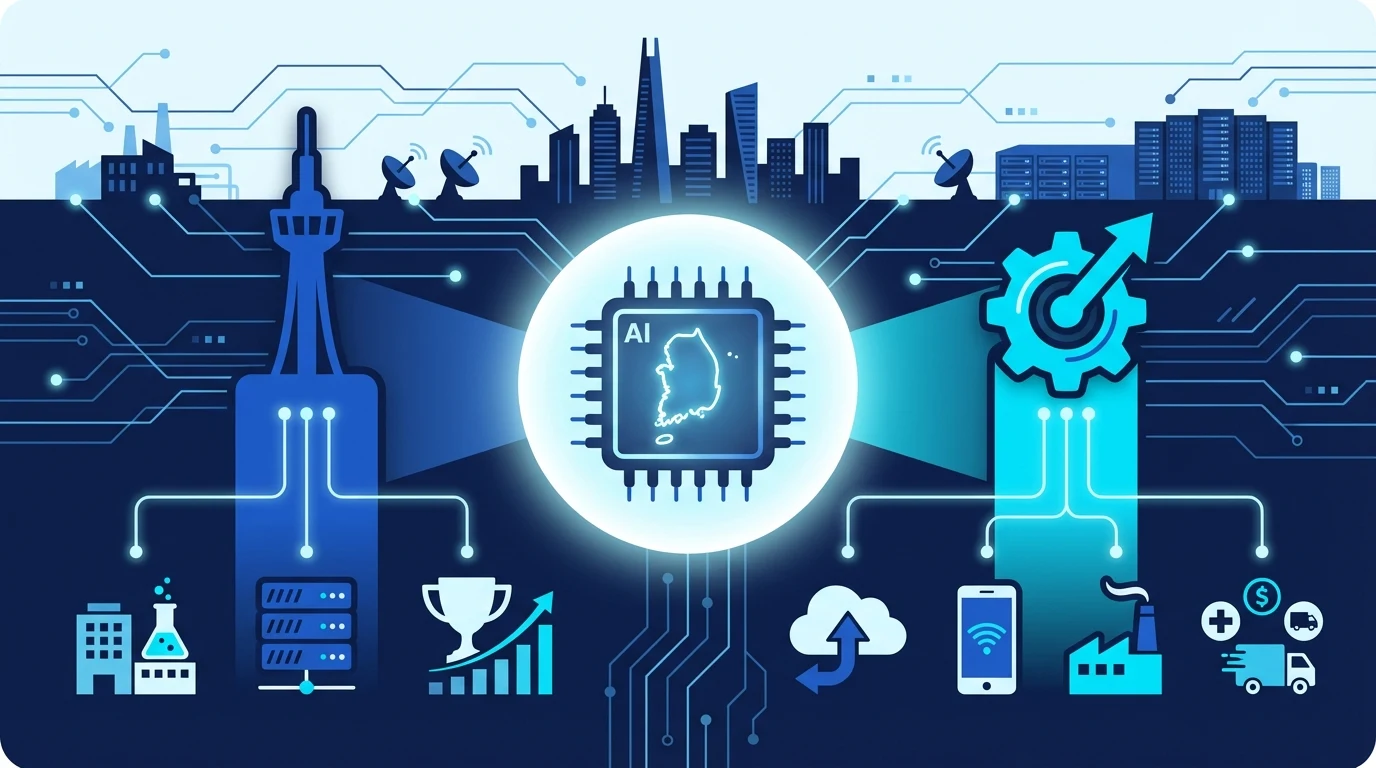
The term "K-Foundation" frequently appears in the news these days, but it doesn't mean LG and Upstage are jointly creating a single model. In reality, both companies are participating independently in the Ministry of Science and ICT's "Independent AI Foundation Model" project. Currently, there are no public records of a unified model development plan or a joint roadmap.
It's more accurate to interpret "K-Foundation" as a term referring to the broader trend of independent AI foundation models spearheaded by Korean companies. Missing this distinction can lead to inflated expectations and a blurred understanding of the actual landscape.
Different Strengths, Shared Direction
So, why are these two companies so often mentioned together?
LG AI Research focuses on the competitiveness of the large foundation model itself. They have publicly declared their ambition to develop EXAONE, or "K-EXAONE," into a globally top-tier AI foundation model. The model's depth and its symbolism as a national representative are central to LG's influence.
Upstage takes a different approach. The company has grown its presence through efficient model operations and its capabilities in enterprise AI solutions. The fact that it advanced to the second phase of the government project alongside LG AI Research and SK Telecom shows it's at the heart of core model competition, not just an application service provider. Furthermore, if the reported acquisition of AXZ, the operator of the portal Daum, by Upstage comes to fruition, it suggests a strategy to expand beyond a model company to a platform with broader user touchpoints.
"How powerful a model can be" and "how widely and quickly that model can connect to industries." These two companies each represent these essential directions required by the Korean AI ecosystem.

What EXAONE Has Demonstrated
LG has delivered the most concrete results so far.
According to an AI Times report, K-EXAONE achieved the highest scores in all categories—benchmark, expert, and user evaluations—during the first assessment of the Ministry of Science and ICT's Independent AI Foundation Model project in January 2026. This isn't just about one good number; it signifies simultaneous recognition of both laboratory performance and real-world applicability.
The foundation model competition is ultimately decided in the field. Beyond mere accuracy, the criteria include how reliably it can be used in actual work environments. This is where LG's claim of a "national representative model" stems from. At the same time, it raises the next question: Is a good model alone sufficient?
Why Upstage is Crucial
Upstage's strengths lie in speed and connectivity.
Advancing to the second phase of the government project validates its technical capabilities, but what stands out more is its approach to industrial application. In addition to building enterprise AI solutions and efficient model operation capabilities, if the AXZ acquisition materializes, it would significantly expand the service touchpoints for experimenting with and deploying models.
Note: The acquisition is still in the planning stage. While the market tends to factor expectations into prices early, outcomes can change during execution. What's important to understand now is the direction, not just the result. It suggests that Upstage is moving from an AI model company towards becoming a larger platform player, and this could change the nature of Korean AI competition.
Why the Government is Driving This Competition
The Ministry of Science and ICT's Independent AI Foundation Model project is not about showcasing technology. According to korea.kr, the core objective of this project is to elevate South Korea to the 'AI Top 3' by breaking free from technological, economic, and security dependence on overseas hyper-scale AI models.
In practical terms, this means that AI is now fundamental to all industries, from search and office automation to manufacturing, biotechnology, education, and national defense. Relying solely on foreign models for this foundation would inevitably lead to continuous influence over pricing, policies, and data strategies. This is why the competition for Korean foundation models is an infrastructure issue, not merely a matter of pride. It's also why LG's large model capabilities and Upstage's industrial application strengths are both drawing attention.
How to Interpret This Trend
First, it's crucial to separate confirmed facts from expectations. The idea that LG and Upstage are jointly developing a single model is not currently a confirmed fact. Both companies are independently competing within the government project, forming key pillars of the Korean AI ecosystem.
There are clear achievements. EXAONE's top ranking across all categories in the first assessment is a significant milestone. However, specific long-term differentiation strategies against global big tech or roadmaps for international market expansion have not yet been widely disclosed. For now, it's appropriate to acknowledge the achievements without rushing to judgment.
Whether you're a developer using AI tools, an IT manager crafting strategy, or simply a reader curious about the current state of Korean AI, the reason to pay attention to this trend is the same. The tools you use, your company's AI strategy, and the quality of services you encounter are all ultimately connected to the outcomes of this competition.
Conclusion
The "K-Foundation" trend isn't about one company winning. LG demonstrates the scale of the model, while Upstage shows the potential for field application and expansion. When they work together, Korean AI can establish itself as an independent ecosystem, not just a follower.
The question to ask now is not who has the flashiest model, but who is actually building a lasting foundation for Korean industries and users. The answer is still unfolding.