"I'll definitely exercise today." If you make that promise every morning, only to let it slip by evening as you sink into the couch, it's likely not a lack of willpower. Instead, health management simply hasn't found its place within your daily flow.
The most significant shift in 2026 health trends isn't about "trying harder." The concept of 'Health Intelligence (HQ),' introduced by New Senior, perfectly captures this shift. It emphasizes the importance of understanding and adjusting your sleep, diet, and stress levels proactively, rather than reacting only when problems arise. It's not about stronger resolve, but about building more enduring structures.
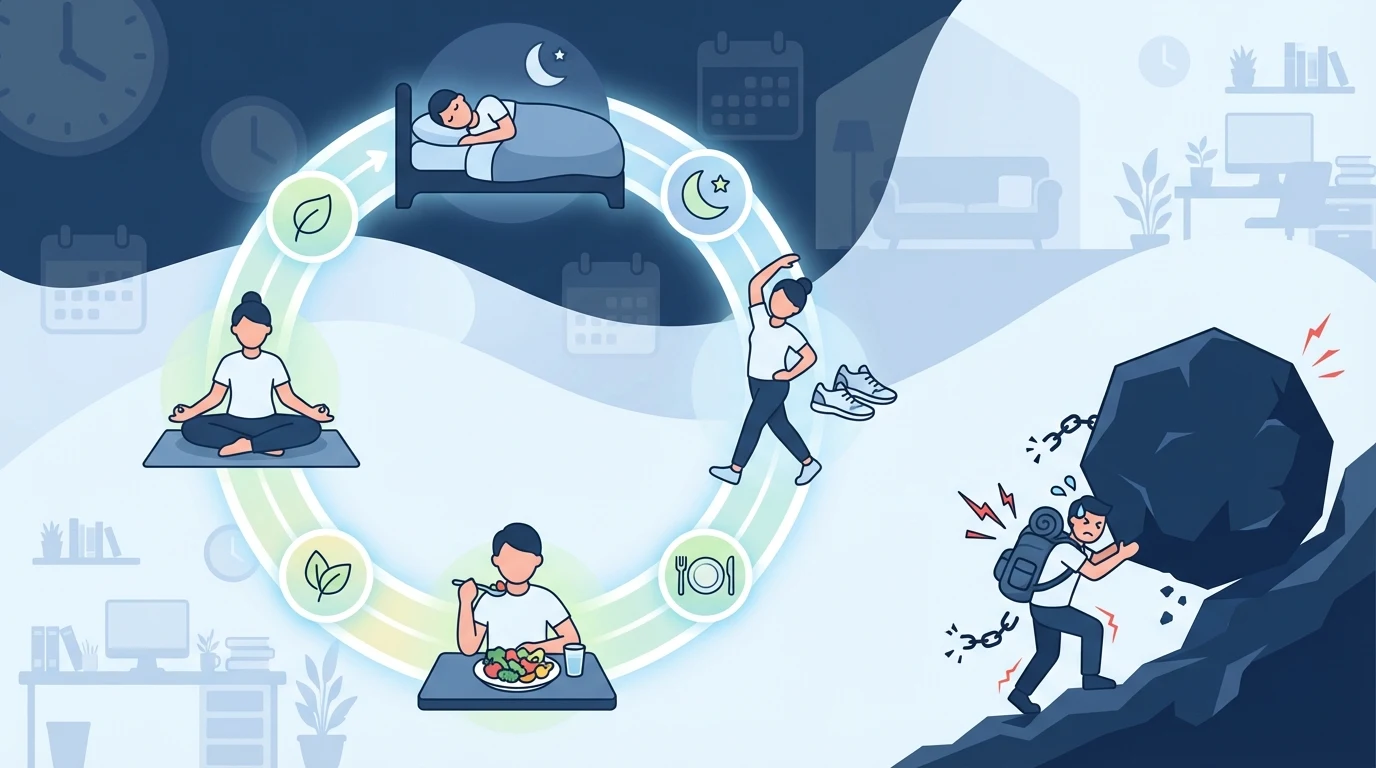
Sustainable Health Comes from Structure, Not Just Willpower
Short-term goals often have short-lived effects. A one-month diet or a five-day-a-week exercise plan can easily fizzle out after a few weeks, especially for busy professionals or middle-aged individuals.
Content Casting defines the core of health management for busy professionals as 'designing sustainable structures.' Even the WHO physical activity guidelines point out that lack of exercise and prolonged sedentary lifestyles are major risk factors for chronic diseases. Ultimately, health isn't about how much you do, but how you ensure continuity.
Change Your Schedule Before Changing Your Body
If you only think of exercise as a "proper one-hour session," you'll constantly postpone it. Breaking it down into smaller, manageable chunks—like a 10-minute stretch before work or a short walk after lunch—makes it much easier to execute. A repeatable routine that fits into your existing schedule is more important than a perfect one.
The same applies to diet and sleep. The pattern of striving for perfection only to give up when things go slightly awry is common. Instead of grand plans, establishing small, daily standards will yield longer-lasting results.
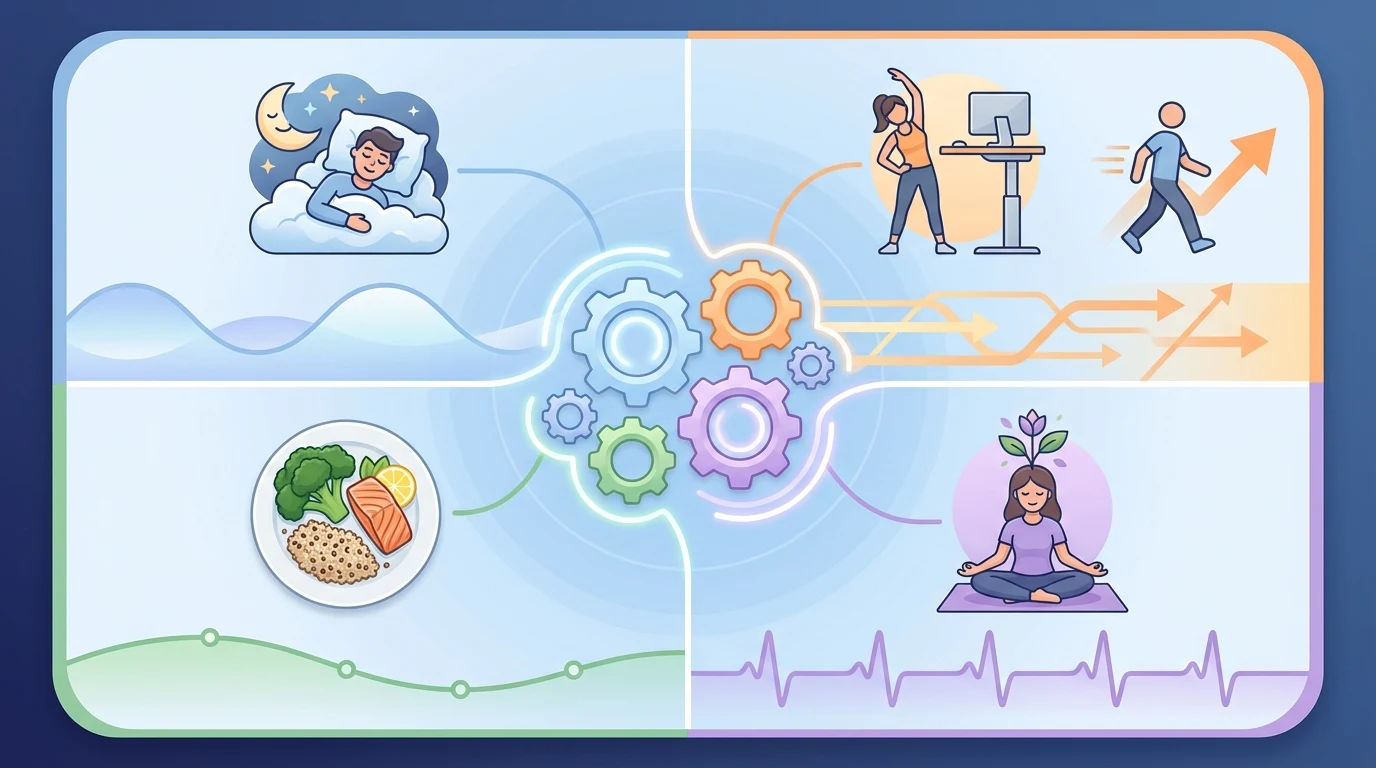
Three Habits of Long-Term Healthy Individuals
According to a Harvard Medical School specialist cited by HiDoc, consistent lifestyle habits like sleep quality, mindfulness, and consuming whole foods are key to preventing chronic diseases and maintaining vitality. While these aren't new concepts, they are often the first things to falter.
Sleep disruption can lead to a cascade of problems, affecting appetite, concentration, and mood. The starting point is identifying patterns that hinder your sleep, such as late-night screen time or irregular bedtimes.
Stress management doesn't need to be elaborate. What matters is whether you take even a brief moment each day to regulate your breathing and acknowledge any tension you're feeling. One reason sustainable health management is challenging isn't a lack of information, but rather how easily we miss our body's signals.
Dietary choices that prevent sharp blood sugar fluctuations and focus on whole foods are more sustainable. Establishing repeatable standards for each meal is more practical than adhering to an elaborate meal plan.
Technology Doesn't Replace Routines; It Supports Them
The digital healthcare market is projected to grow from approximately $110 billion in 2020 to $509 billion by 2027. Telemedicine and AI-powered health analytics are becoming increasingly integrated into daily life. AI healthcare can assist with personalized diagnoses and management by integrating genetic information, lifestyle data, and electronic health records (EHR).
However, practical limitations such as data security, accessibility gaps, and algorithmic bias still exist. Technology is a tool to help you quickly identify when your routine is faltering, not a replacement for managing your health yourself.
If you use wearables or health apps, it's more practical to consistently monitor one or two key metrics, like sleep patterns or activity levels, rather than collecting an overwhelming amount of data.
Principles for Sustaining Long-Term Health Management
You don't need to change everything at once. Even by adopting these four principles, your routines will last much longer.
- Start with Small, Repeatable Actions: Small daily actions are better than grand plans that only last a few days.
- Prioritize Reducing Sedentary Time: Before increasing your exercise duration, simply breaking up long periods of sitting is a step in the right direction.
- Track Your Lifestyle Patterns: Developing the habit of observing how your sleep, meal times, and fatigue levels are connected will quickly reveal where your routine breaks down.
- Technology as a Supporting Tool: Use apps and devices not as judgment tools, but as aids to help you recognize when your routine is wavering.
Signals That Require Professional Help
While sustainable health management relies on the power of lifestyle habits, it doesn't mean you should tackle every signal alone. If fatigue persists for several weeks, or if clear warning signs like sleep problems, abnormal blood sugar, chest pain, or shortness of breath recur, seeking medical attention should take precedence over self-management.
Note: The health information in this article is intended to help guide daily management. It does not substitute for personal medical diagnosis or treatment plans. If you have existing conditions or are taking medication, please consult a healthcare professional before making changes to your routine.
The health trend for 2026 isn't about enduring more or pushing harder. It's about understanding your daily routines, making small adjustments, and maintaining them consistently before your body shows signs of breakdown. Start by examining your bedtime tonight, a period of prolonged sitting, or one of your daily meals. Sustainable health management isn't a project that begins on a special day; it starts with choices that make your ordinary day a little more stable.