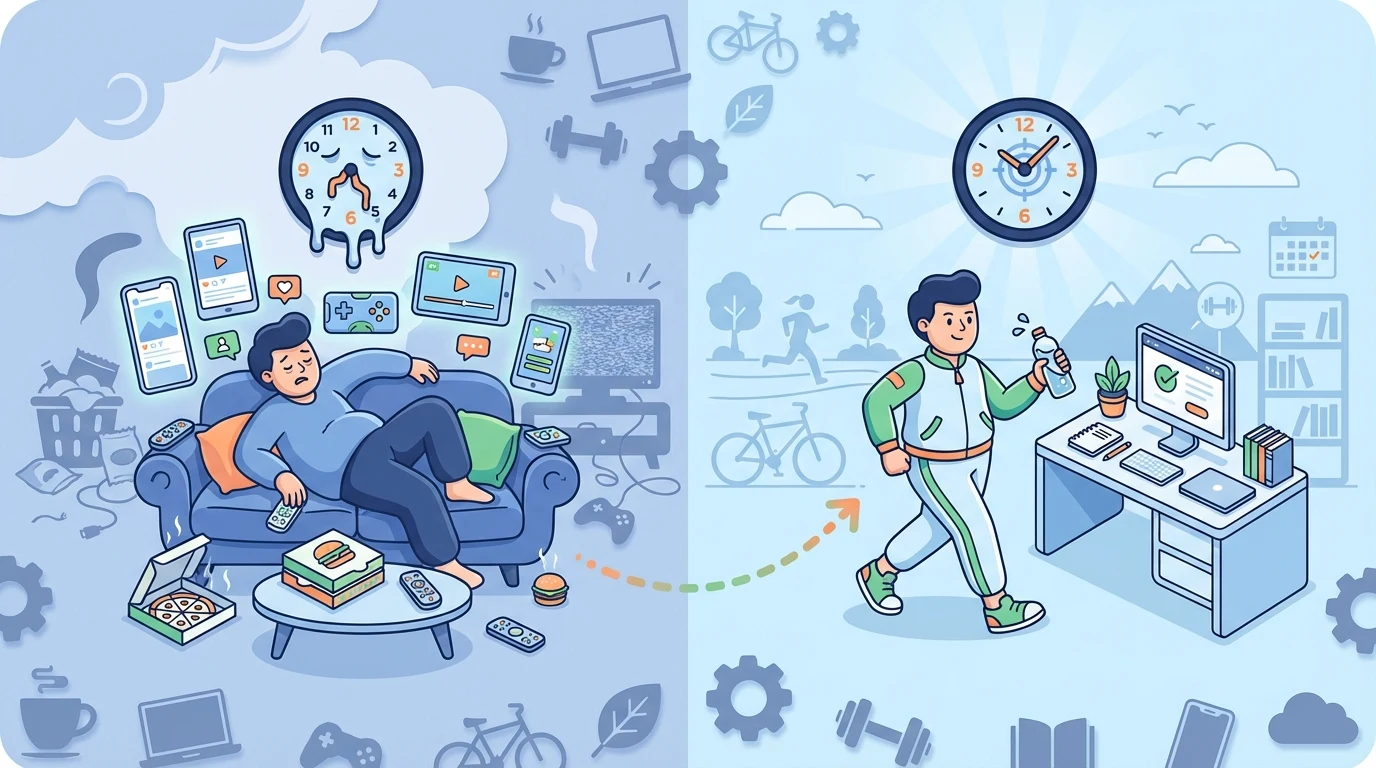
Snoozing your alarm three times, ordering lunch delivery, and spending your evenings watching short-form videos until the day ends. Your body feels less tired than before, yet your motivation is strangely at an all-time low. If the question "Why am I getting more exhausted when everything is so convenient?" has crossed your mind, it might not be a matter of laziness, but a systemic issue.
The Comfort Crisis, a term frequently discussed these days, is linked to a form of lethargy distinct from the fatigue caused by deprivation. There's a growing consensus that excessively comfortable environments can actually lead to stagnation and apathy. The key isn't to glorify discomfort, but to recognize that removing too much friction from our lives makes us less active. What we need, therefore, isn't an extreme, rigid mindset, but rather self-control training to get ourselves moving again.
Why Comfort Can Lead to Powerlessness
Comfort itself isn't inherently bad. The problem arises when every process becomes too instantly easy, weakening our 'muscles' for waiting, enduring, and making choices.
In an environment where you can order food the moment you're hungry, find instant stimulation when bored, and immediately avoid anything that causes anxiety, short-term gratification is too readily available. Self-control is ultimately the ability to delay short-term gratification for long-term goals. When opportunities to exercise this ability diminish, our sense of agency in life also fades.
So, there's no need to conclude that your current lethargy is simply due to "weak willpower." It's more realistic to first consider whether you've simply used your self-regulation less in an environment that allows for easy reactions. This naturally leads to the question: can self-control truly be redeveloped?
Self-Control is a Skill to Be Trained, Not a Fixed Trait
Self-control isn't a personality trait that's set in stone; it's a skill that can be enhanced through training. Both psychological research and expert advice consistently suggest that clarifying goals, building small successes, managing tempting environments, and maintaining basic conditions like sleep and exercise are all beneficial for strengthening self-control.
What's crucial here isn't to "become strong all at once," but to "make it usable again." If you try to start waking up at 5 AM, exercising for two hours daily, and doing a digital detox all at once, you'll likely not sustain it for long. Self-control is about repetition, not grand gestures, so you need to design small points of friction that fit your daily life.
The starting point should always be smaller than a grand resolution. Instead of focusing on what to cut out, first understand the situations where you most easily falter; that's where the next steps will become clear.
Those Who Last Prioritize Motivation Over Willpower
People who constantly feel a lack of willpower often have an underdeveloped motivational framework. Connecting goals with your core values, engaging in positive self-talk, and rewarding yourself for small achievements are all effective ways to build habits.
Phrases like "I need to lose weight," "I need to study," or "I shouldn't procrastinate" don't last long. Instead, statements connected to your personal standards, such as "I want to create a condition where I don't easily fall apart after work," or "I want to be someone who follows through on my commitments," are far more sustainable.
Intentionally acknowledging small accomplishments is also crucial. While people are driven by big goals, they also keep going tomorrow because of the feeling of having achieved something today. Building this feeling is the core of motivation design.
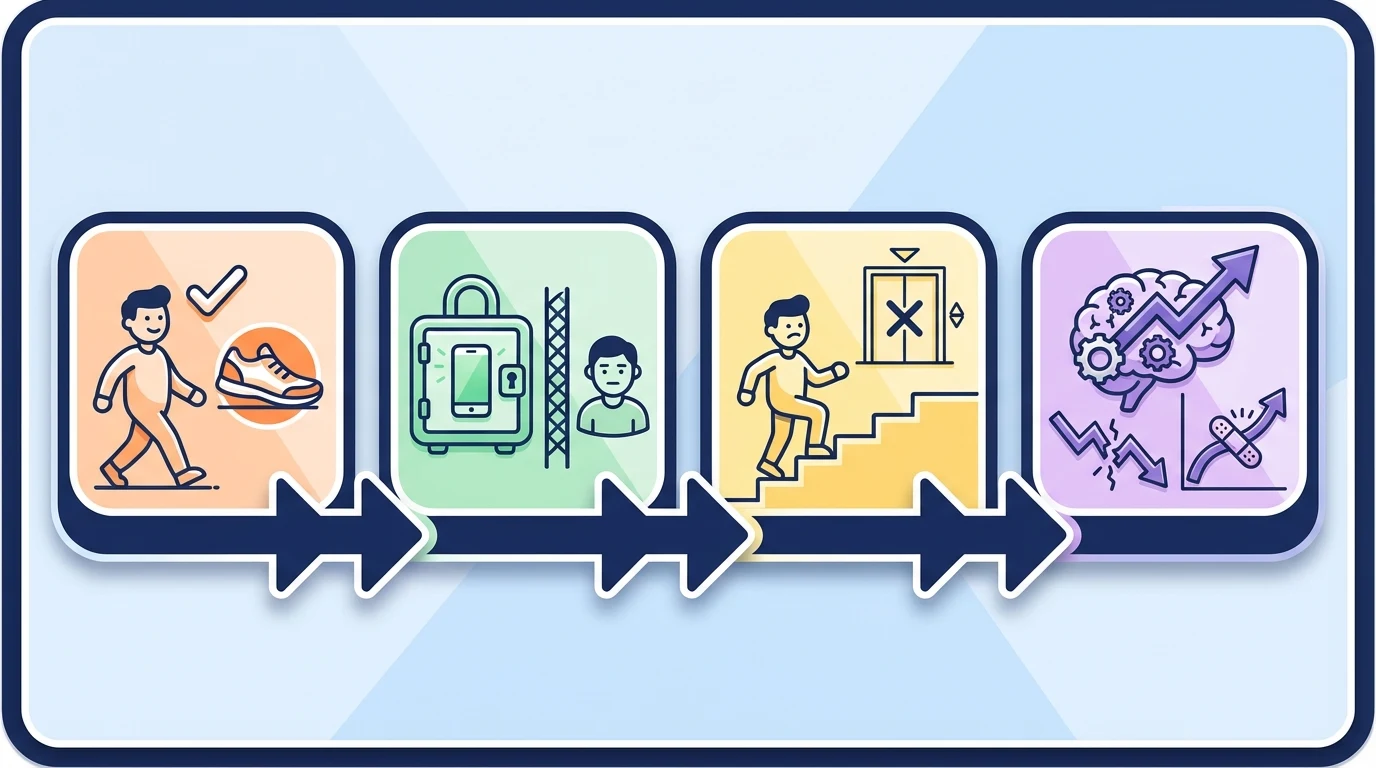
4 Steps to Self-Control Training to Escape Lethargy
1. Shift Goals from "Willpower-Based" to "Action-Oriented"
"Being less lazy" isn't a goal. It should be an actionable statement, like "walk for 10 minutes before sitting on the couch after coming home from work." Vague goals are swayed by mood, while specific goals lead to action. The more abstract a goal is, the first it disappears on days when you're not feeling great.
2. Distance Yourself from Temptation, Rather Than Resisting It
Self-control doesn't solely mean having the strength to confront every temptation head-on. Instead, designing your environment to reduce situations where you're likely to falter is more important. This could mean deleting apps or turning off notifications when you can't focus, or removing visible snacks if late-night eating is a recurring issue. Changing your environment isn't cowardly; it's an efficient form of training.
3. Intentionally Introduce Small Discomforts
Breaking free from the comfort crisis doesn't mean making your life miserable. It's more about not eliminating all discomfort. You need choices that are small in burden but prevent avoidance, such as taking the stairs for just one floor instead of the elevator, tidying up for 5 minutes before lying down, or taking a 20-minute walk instead of seeking short-term stimulation. As these small discomforts accumulate, you'll regain the sense that "I can tolerate discomfort."
4. Don't Interpret Failure as a Personality Flaw
If you falter one day and conclude, "See, I can't change," your training will immediately cease. You need an attitude that views failure as data. By understanding why you failed, what times of day you're weakest, and what interfered, you can make necessary adjustments. Self-control is more about correction than self-blame. You need to believe that abilities can improve with effort to avoid giving up midway.
Pushing Too Hard Can Be Counterproductive
Overemphasizing self-control can increase guilt when you fail, and those with perfectionist tendencies may even find themselves closer to burnout.
Note: If your lethargy persists for a long time or begins to disrupt your sleep, eating habits, and work performance, it shouldn't be viewed solely as a willpower issue. Other factors such as depression or socio-economic instability might be contributing to your apathy. In such cases, self-control training comes after addressing the root causes.
Not every training approach works for everyone. For some, environmental control might be the first step, while for others, prioritizing sleep recovery could be key. Self-control training isn't about copying someone else's routine; it's about adjusting the intensity to fit your own life rhythm.
Start Small: Just This Much Is Enough Today
Don't try to change your entire life at once; just add one small point of friction. This could be drinking a glass of water before checking your phone in the morning, walking for 10 minutes before collapsing on the couch after work, turning off notifications for just 20 minutes of focused work, or jotting down one small thing you accomplished today before bed. Any one of these is enough.
It's perfectly fine if it seems small. Self-control doesn't grow in the size of grand resolutions, but in the size of promises you can repeatedly keep.
Comfort isn't always bad. However, if excessive comfort is robbing you of your life's rhythm and sense of agency, what you need now isn't a fierce determination, but simply the courage to embrace a little discomfort.