There are days when you wake up feeling heavy for no particular reason. When tasks pile up and your motivation falters, it's hard to sustain focus on studies or work. This is why many people are now seeking AI learning tools not just to "memorize faster," but for methods that can also care for their condition and thought patterns.
A KAIST research team announced that brain-based AI technology can increase inference learning efficiency by up to 40% compared to simple repetitive learning. KOTRA also projected that by 2026, AI and digital technologies will be key tools for personalized mental health management. The crucial point isn't how much you use AI, but how you tailor its use to your personal mindset training.
Why Mindset Training Needs to Be Part of the Picture Now
When productivity drops, many people first try to fix their time management. However, more often, it's fatigue, anxiety, and self-blame that accumulate first, leading to a breakdown in concentration. A packed schedule won't sustain your mental resilience.
AI's strength lies in personalization rather than mere encouragement for repetition. According to KOTRA, AI-powered solutions can analyze user meditation habits, psychological states, and even voice patterns to suggest programs tailored for sleep management, stress reduction, and anxiety relief. Well-designed AI learning recommendations are less about "do more" and more about "adjust to suit who you are today."
How to Apply AI-Powered Mindset Training in Practice
Mindset training doesn't have to be grand. Short, repeatable routines are more realistic, and AI is most useful as an assistant that personalizes these routines.
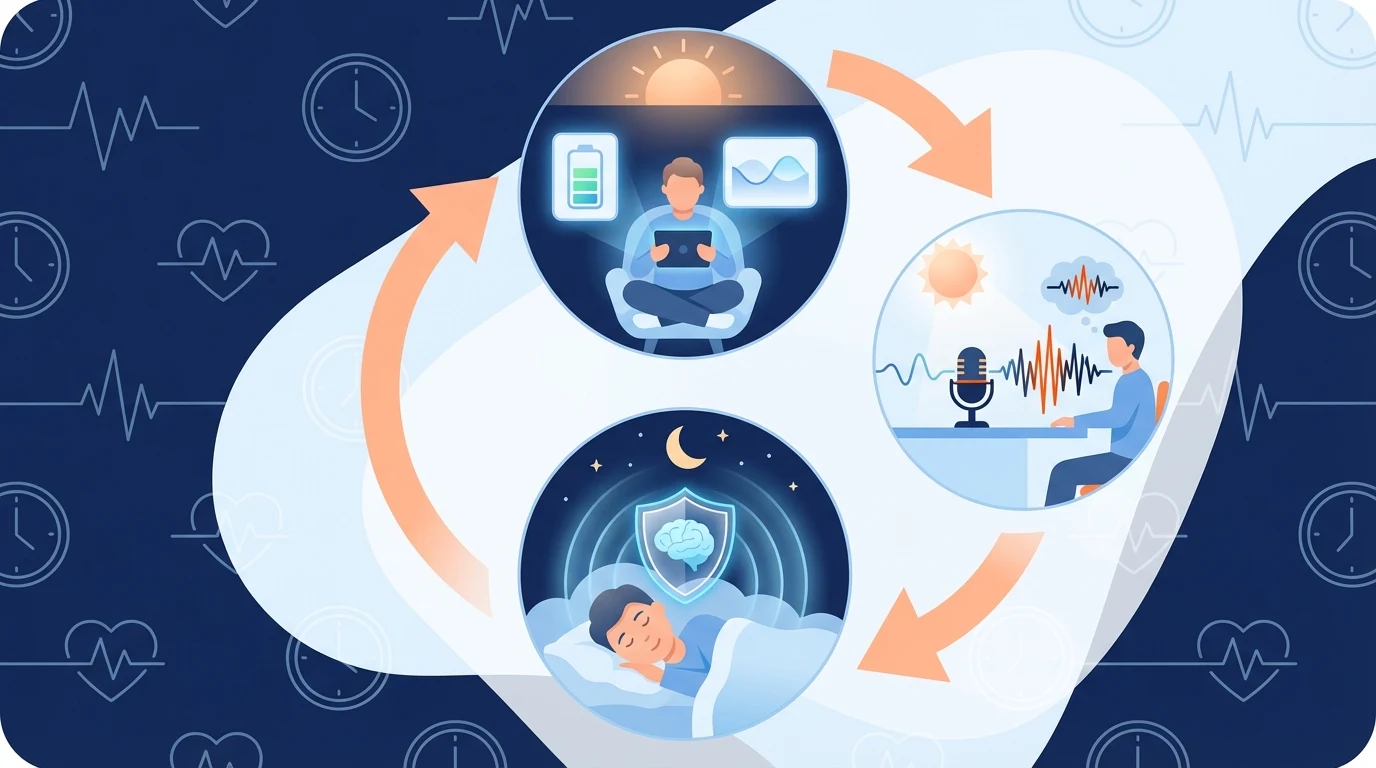
1. Morning — Start with a Status Check, Not Just Motivation
When starting your day, what you should check first isn't "Let's do well today," but your current state. You need to identify if you slept poorly, if your tension is high, or if you're in a condition to concentrate. If AI recommends lowering the intensity of your day, or suggests a short breathing exercise or meditation routine based on your sleep patterns or past records, that itself is a great start.
Adjusting your starting line to avoid overexertion, rather than forcing motivation from the morning, is far more effective in maintaining your self-efficacy throughout the day.
2. Midday — Record 'Change Signals' Rather Than Just 'Mood'
There's a difference between vaguely feeling emotions and understanding them as patterns. Ellipsis Health analyzes voice patterns to measure emotional states and stress levels, while Mindstation analyzes voice, speech content, and heart rate variability (HRV) to provide personalized content. Wearable-based Panora calculates stress scores from biometric data and links them to improvement guides.
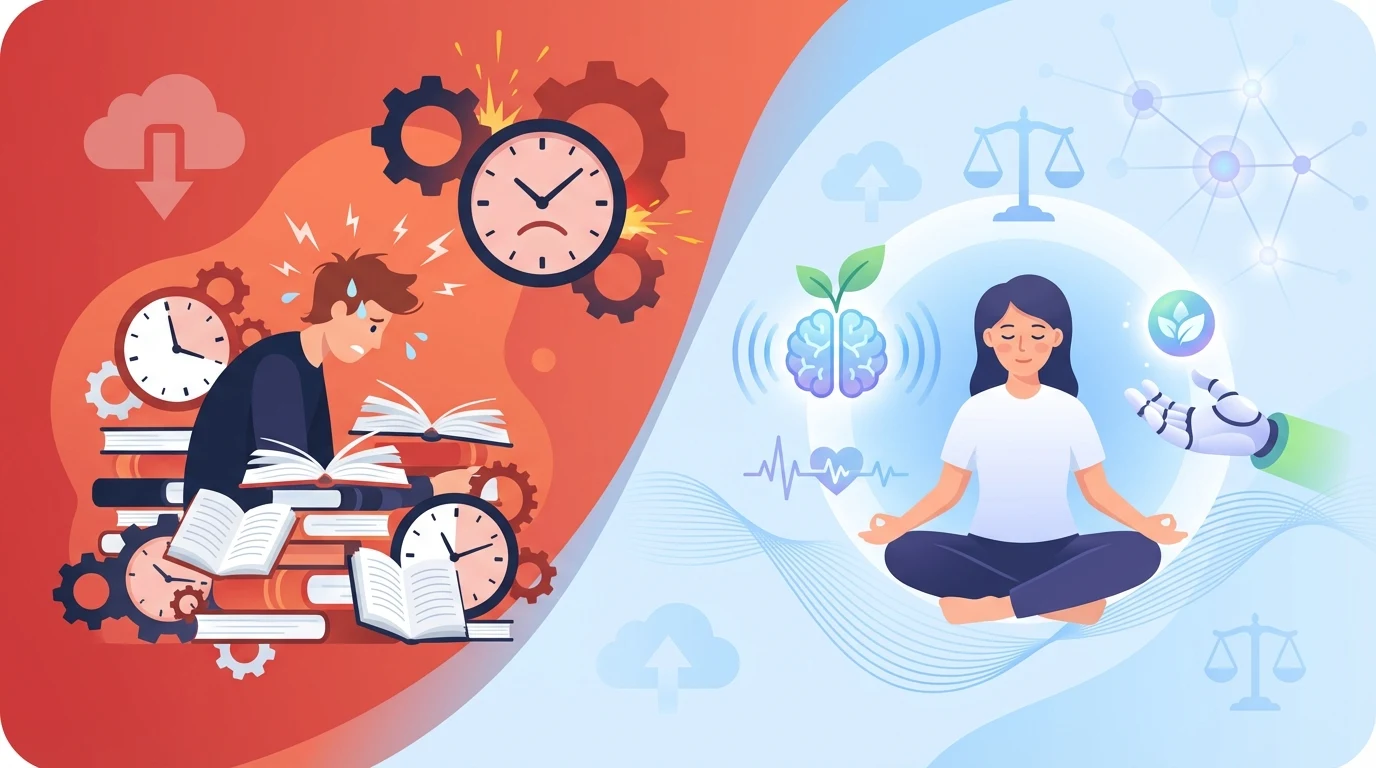
The right question to ask AI isn't "Guess my mood," but rather "Show me the trend of when my state started to waver." When you observe if you become particularly sensitive after lunch, if your sleep is disrupted the night before a presentation, or if tension recurs on specific days, emotions begin to transform from vague anxiety into manageable patterns.
3. Evening — Recovery Routines Over Self-Recrimination
At the end of the day, many people recall what went wrong. To shift your mindset, it's better to first look at 'What drained me?' rather than 'Why did I fail again?' If AI suggests short recovery routines, sleep preparation, or adjusting the next day's workload based on your evening records, it can make a surprisingly big difference.
Learning research consistently shows that adjusting to the situation is more efficient than simply repeating tasks. Mind management is no different. Interventions tailored to your current fatigue level are far more practical than listening to the same affirmations every day.
What AI Excels At and What It Still Lacks
It's important to be clear about this part.
According to a Donga Ilbo report, many AI psychological counseling apps are classified as wellness products rather than medical devices, operating under relatively loose regulations. There are also criticisms that AI has limitations in clinical reasoning, making it unsuitable for taking on the role of an independent psychotherapist.
Evidence of effectiveness is also not yet considered sufficient. Chosun Ilbo reported a lack of clear research on the efficacy of AI mental health apps, and added that McGill University's psychology research institute reported cases of panic attacks or trauma recall occurring during meditation app use. However, this is not a universal conclusion for all users, but rather reported cases and precautions that should be understood.
Caution: While AI can offer comfort or recommend routines, it cannot clinically diagnose the root cause of distress. AI should not be solely relied upon; it is best used as a tool to help you become aware of your own state more quickly.
To Use AI Reliably, Remember These Points
Use AI as a coach, not a judge. It can help with mood tracking, sleep routines, and checking stress trends, but the risk increases when you entrust it with diagnosis or critical judgments.
Sensitive data like voice patterns, biometric information, and heart rate variability are as private as they are convenient. It's essential to get into the habit of first checking for clear privacy and security standards.
If your mental state rapidly deteriorates or your daily functioning is significantly disrupted, human connection comes before an app. While AI is useful for initial checks and basic support, for dealing with deep distress, combining it with professional counseling is much safer.
Ultimately, Good AI Learning Tools Don't Push You Harder
What might be needed now isn't immense willpower, but a system that helps you quickly recognize your state and accelerate your recovery. AI in 2026 is certainly evolving rapidly in that direction. However, having an attitude that understands both its potential and limitations is what truly makes it helpful.
Morning status checks, midday stress signal recording, and evening recovery routine organization — consistently doing just these three things with AI can begin to transform 'Why am I so tired?' into 'When do I falter, and how do I recover?' As these changes accumulate, your studies and work will ultimately be sustained for longer.