If you often hear "That was in the chat" in your team, the problem isn't the number of tools, but a structure where conversations don't seamlessly transition into tasks. For hybrid teams with remote and in-office members, the cost of asking the same question twice is surprisingly high.
On November 17, 2025, Jandi made a significant move to change this structure by launching `Jandi Project`. This new feature allows users to create tasks, track their progress, and embed conversation context directly within the messenger, all in real-time. In the same year, `Jandi AI (Sprinkler)` was also officially released and is currently in beta service for select customers.
Why a Structure Where Conversations Become Tasks is Crucial
In the past, when choosing a collaboration tool, "Is the messenger convenient?" was the primary concern. Now, "Are conversations preserved and tasks trackable?" has become more crucial.
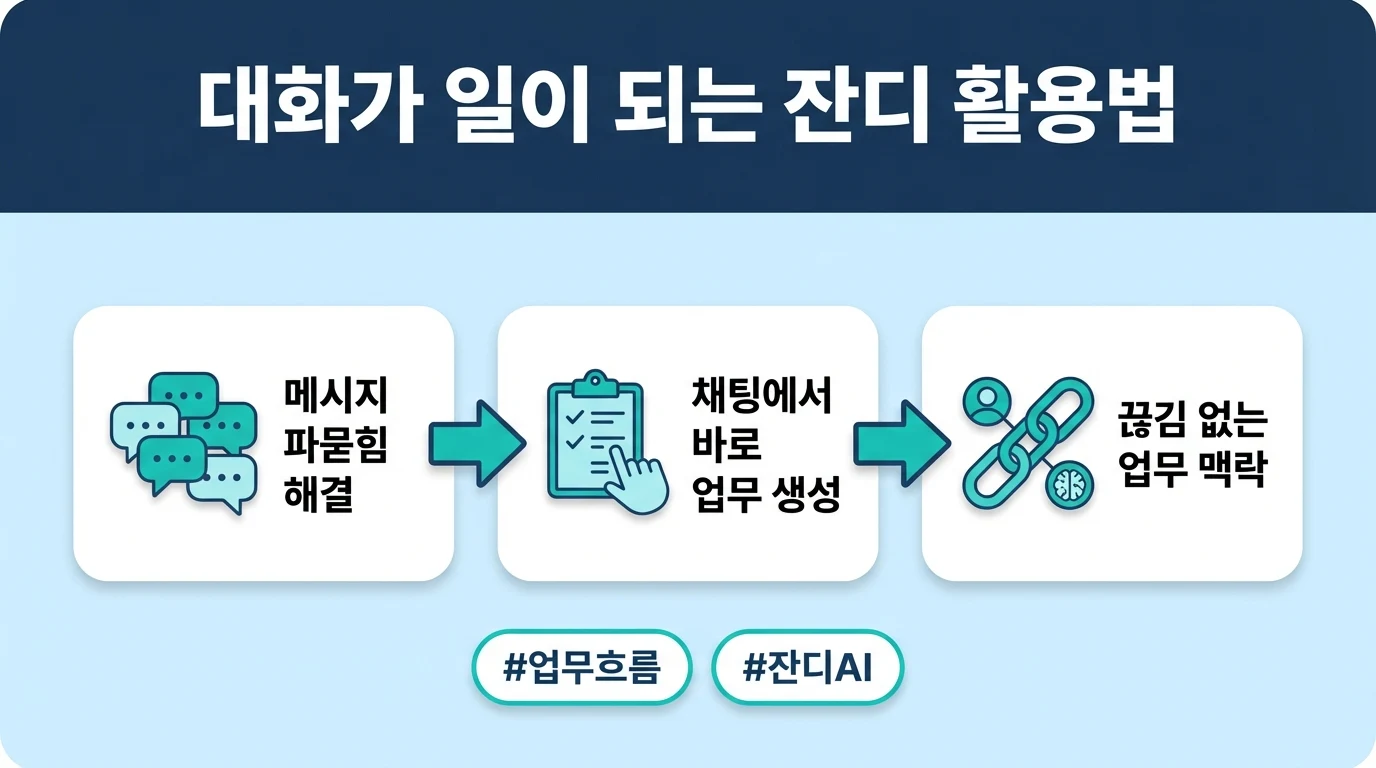
According to Jandi's official announcement, `Jandi Project` offers a dashboard, Gantt charts, Kanban boards, and wikis all in one place. Tasks can be created directly from messenger conversations, and related comments are reflected in the project in real-time. This significantly reduces the fatigue of switching back and forth between "chat here, task board there."
More important than the sheer number of features is reducing the cost of context switching. If a team leader's message, "Please handle this by today," gets lost in the conversation thread, you'll have to search for it later. If a task is created on the spot with its status recorded, follow-up questions and missed items are significantly reduced.
Realistic Uses for Jandi AI
`Jandi AI (Sprinkler)` supports message drafting and editing, information retrieval, and brainstorming. It also includes knowledge base (RAG) based responses that reference internal documents, OCR to extract information from attached files and images, and a feature to summarize unread messages per chat room.
Trying to implement all these features at once can feel awkward. It's better to start small.
- Morning Routine: Quickly prioritize with unread message summaries.
- Document Creation: Refine lengthy announcements or report drafts with AI.
- Information Review: Extract key information from attached images or files first.
- Before Meetings: Reduce unnecessary questions by searching scattered conversation contexts.
The core idea isn't that "AI does the work for you." It's about using AI to reduce the time people spend searching, re-asking, and re-organizing information.
Note: There isn't much public data yet on Jandi AI's success stories for specific job roles, so it's more realistic to integrate it one repetitive task at a time rather than having grand expectations. Jandi has stated that future MCP (Managed Cloud Platform) integration will support the use of external data sources like Notion and Google Search, but the actual scope and depth of these integrations will need to be confirmed upon release.
Step-by-Step Adoption Strategy for Team Leaders
Pushing for a company-wide standard from the start can easily lead to resistance. A realistic approach involves these steps:
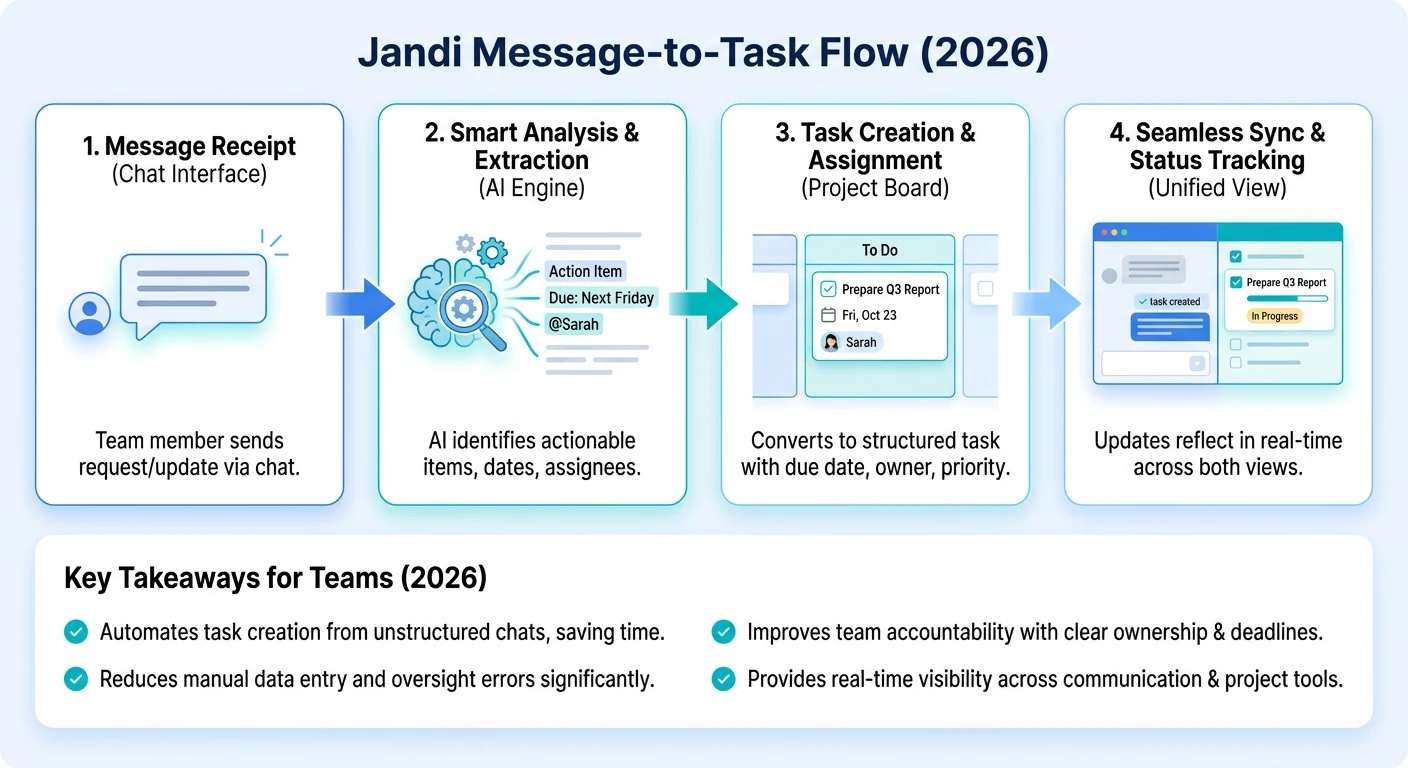
Step 1: Choose just one frequently missed task. Repetitive workflows like customer request handling, weekly deadline checks, or content approvals are ideal.
Step 2: Create a habit of generating only that task directly from conversations. Eliminating "tasks left only in words" is the first step.
Step 3: Start status management with a single view that suits your team. Kanban boards work well for fast-moving teams, while Gantt charts are better for those with high schedule dependencies.
Step 4: Begin your wiki with the 5 most frequently asked criteria. Don't create a heavy rulebook; just upload the guidelines your team members search for most often.
The strength of this approach is the low training cost. It feels less like changing a work tool and more like adding a tracking mechanism to a familiar conversation flow.
Cost and Role Division with Other Tools
According to Jandi's official guide, `Jandi Project` is an add-on for paid teams, costing an additional 2,000 KRW per member per month (with an annual contract). While the amount itself is small, the deciding factor isn't "Is there an additional cost?" but rather "Does it reduce the cost of scattered communication?"
If your team already uses tools like Flow or Modoosign, role division is more important than a complete replacement. It's realistic to assign each tool to the area it excels in: task creation and conversation tracking in Jandi, contract and signature workflows in Modoosign, and project schedule management in Flow. By positioning Jandi as the "starting point for conversation and execution" and connecting other tools as complements, you can reduce redundancies.
Caution: The Jandi feature information discussed in this article is primarily based on 2025 announcements. Detailed AI pricing and external integration scope for 2026 are subject to change, so please check official announcements before implementation.
Which Teams Are a Good Fit for Jandi?
Jandi is a better fit for teams that need a "structure where conversations become lasting tasks" rather than elaborate automation. Its advantages are particularly evident in environments where speed is crucial and repeating explanations is difficult, such as small and medium-sized businesses, startups, and operations teams.
If you're currently managing chat and task tracking with separate tools, you can start by simply integrating `Jandi Project`. Conversely, if complex external integrations or detailed automation are critical for your team, it's better to first verify Jandi's integration scope before making a decision.
Conclusion
What your team needs now isn't more tools, but a seamless flow where nothing gets missed. Jandi definitively moved in that direction by the end of 2025, and the challenge for 2026 is how to connect those changes to practical workflows.
Start by picking just one task that frequently slips through the cracks and create a workflow where it instantly becomes an actionable item from a conversation. Once that one thing is managed, your team's collaboration standards will transform as well.